A church beside an old estate
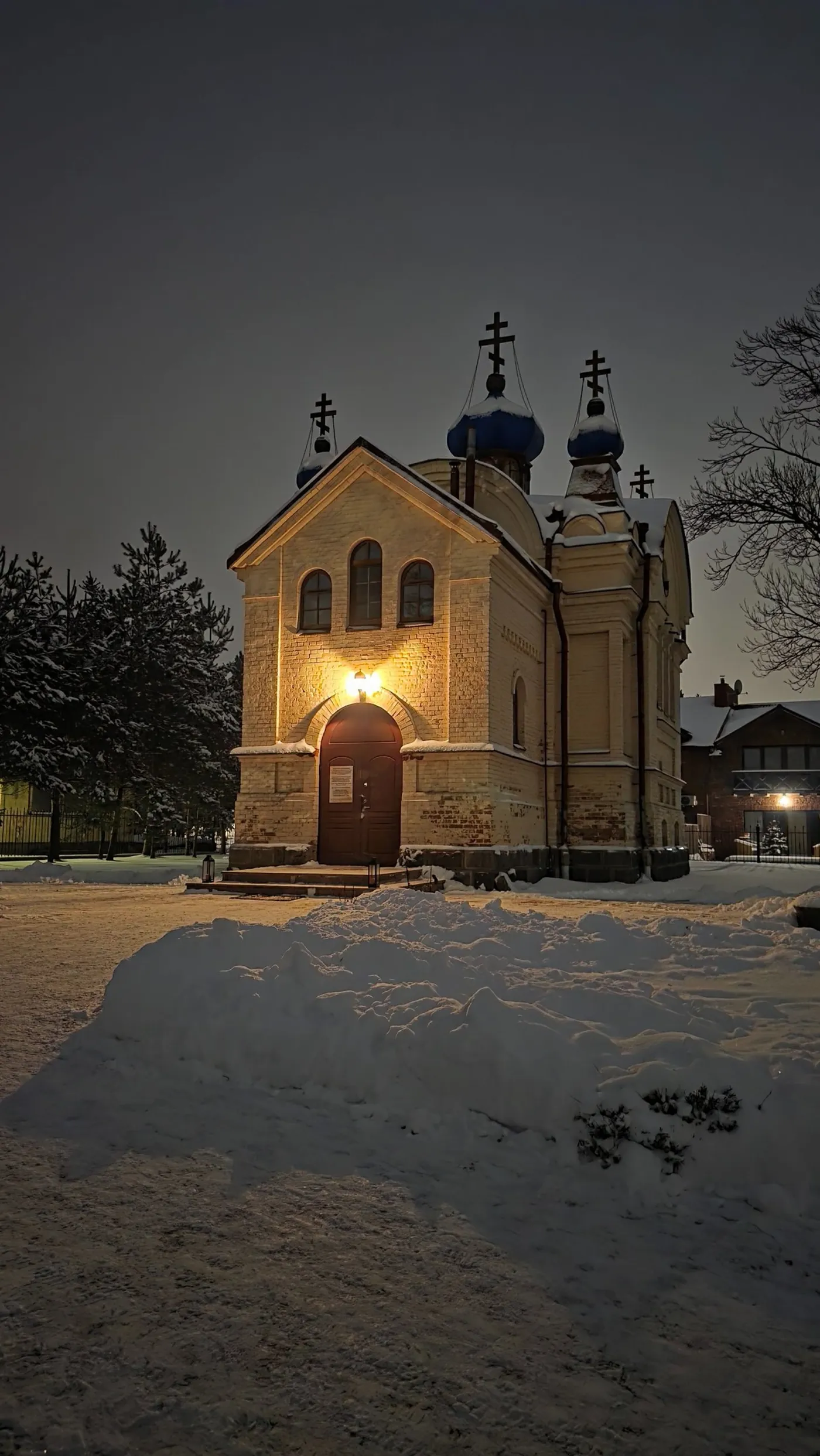
North of Vilnius, in Bukiškis, a village of the Avižieniai eldership in Vilnius District, stands a small brick church with five domes. This is the Church of the Nativity of Christ. It was built in the second half of the nineteenth century as the private church of a general's estate, survived the war and half a century of neglect, and became a working church again only in 2011.
Its history is well documented: the estate and the founding family are described from the files of the Lithuanian State Historical Archives, the building is listed in the Register of Cultural Property of Lithuania, and the last decades are remembered by the parishioners themselves. This page gathers those facts into one account and says in every section where they come from. The detailed history of the owners' family is set out in a separate study by N. Ya. Ivanova.
The Bozheryanovs and the Bukiškis estate
In 1866 Praskovya Nikolaevna Bozheryanova, a landowner from Toropets district in Pskov province, bought the Bukiškis estate in Trakai district: 222 dessiatines of land. The deed of purchase survives in the archives; the estate was held in the wife's name, and in one document her husband plainly calls it 'my wife's estate'. So states N. Ya. Ivanova's study; the date is that of the purchase, not of the building of the church.
Her husband, Alexander Mikhailovich Bozheryanov (1825–1905), was a career officer: he served in the Semyonovsky Life Guards, commanded a rifle battalion, took part in suppressing the uprising of 1863, then commanded an infantry regiment, was promoted to major general in 1874, fought in the Russo-Turkish War of 1877–1878 and was wounded at Plevna. After retiring he settled in Bukiškis and lived there until his death. In 1871 the Senate confirmed the family's hereditary nobility, and Bukiškis was recognised as a family estate.
The manor grounds covered more than five dessiatines. At the centre stood a two-storey house with a stone ground floor and deep cellars, supplied with water by pipes from the lake; around it an English-style park, two lakes joined by canals, a smithy, a bathhouse, a coach house and a servants' house. The land was worked by peasants from the neighbouring villages, who grew rye, wheat, barley, oats, buckwheat and flax. The smithy and some of the farm buildings survive to this day. Ivanova's study describes the family, the estate economy and the children's fates in detail, with archive file numbers.
Sources for this section: [1]
The Church of the Protection: a private chapel and a family vault
The church on the estate was built on the general's initiative in the second half of the nineteenth century; the Register of Cultural Property, the municipality's note and Ivanova's study all date it this way. None of the available sources gives a more precise year, so we do not give one either. The church was consecrated in honour of the Protection of the Mother of God (Pokrov); according to the archives, the estate was afterwards even called Pokrovskoye.
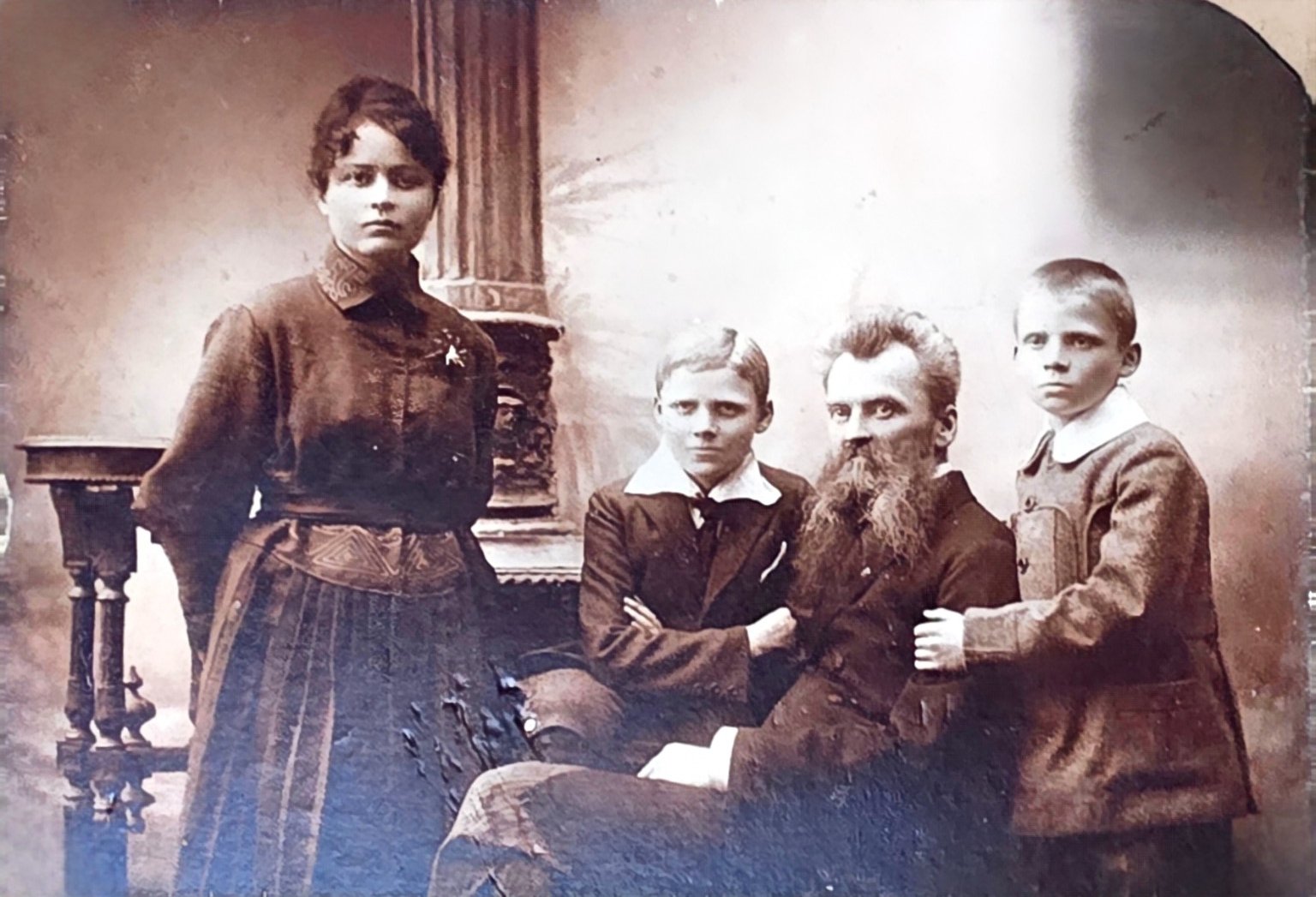
It was a private estate church, intended above all for the owners' family, and at the same time a family vault. The general, who died in 1905, was buried beneath the altar; Praskovya Nikolaevna and the sons were later laid to rest here too. According to a local tradition recorded from villagers, the church did not stand empty even in Catholic surroundings: the general gave gifts to those who came to the services.
The elder son, Alexander Alexandrovich, inherited the estate, lived in Vilnius, was churchwarden of the Church of Saints Constantine and Michael and donated to churches of the region. The daughter, Maria, married and moved to Tver province; in 1931 she was arrested in a case against a church organisation and restricted in her right of residence. Old villagers recall that after the Second World War a woman asked the authorities to hand the Pokrov church over to the Orthodox Church and was refused; Ivanova cautiously suggests this may have been Maria Alexandrovna.
What the building is like
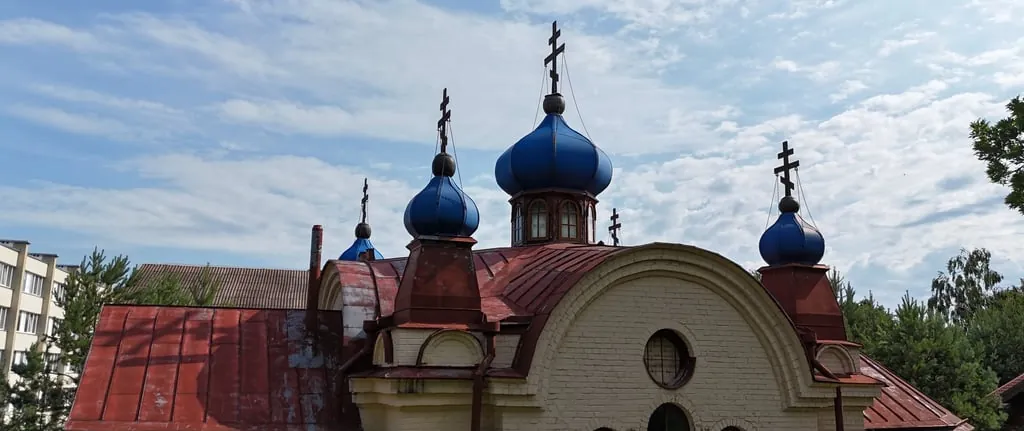
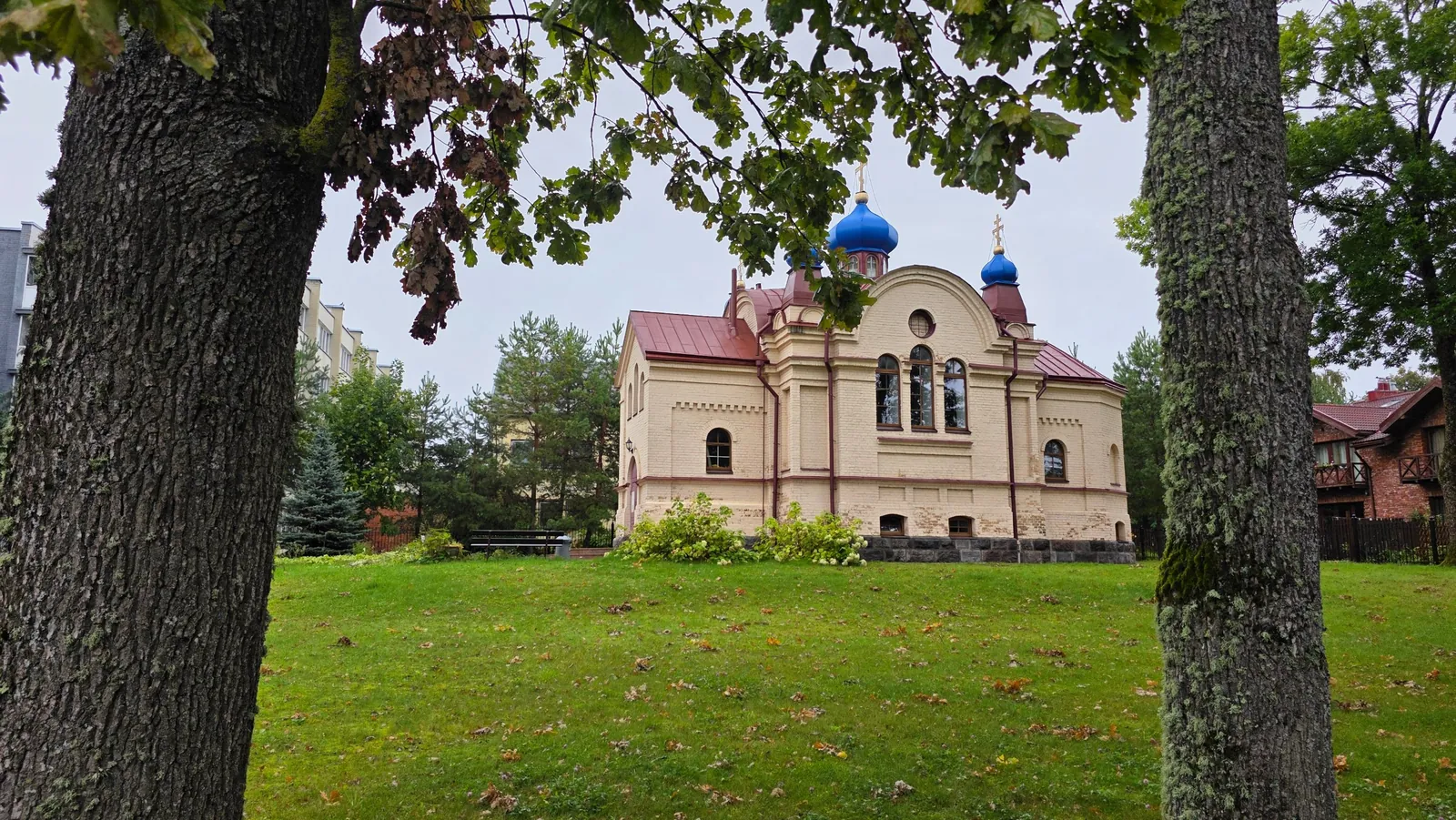
The Register of Cultural Property describes the church as rectangular in plan, with a porch on the north-west and an apse on the south-east, with a central dome and four side domes crowned with octagonal helmets; a plinth of dressed stone blocks, brick walls, windows rectangular, round, arched and segmental, and façades with niches. The style is classed as historicism; in the Russian tradition such churches are called Neo-Byzantine. The church stands on a hill, and the south-western edge of the churchyard is planted with deciduous trees.
The building was entered in the Register of Cultural Property of Lithuania on 26 March 2009 as an object of local significance (unique code 32784), valued both as an architectural type and as a sacred building. The register notes that the volumetric composition was repaired in 2007 and is in good condition.
Sources for this section: [2]
The twentieth century: from estate to storehouse
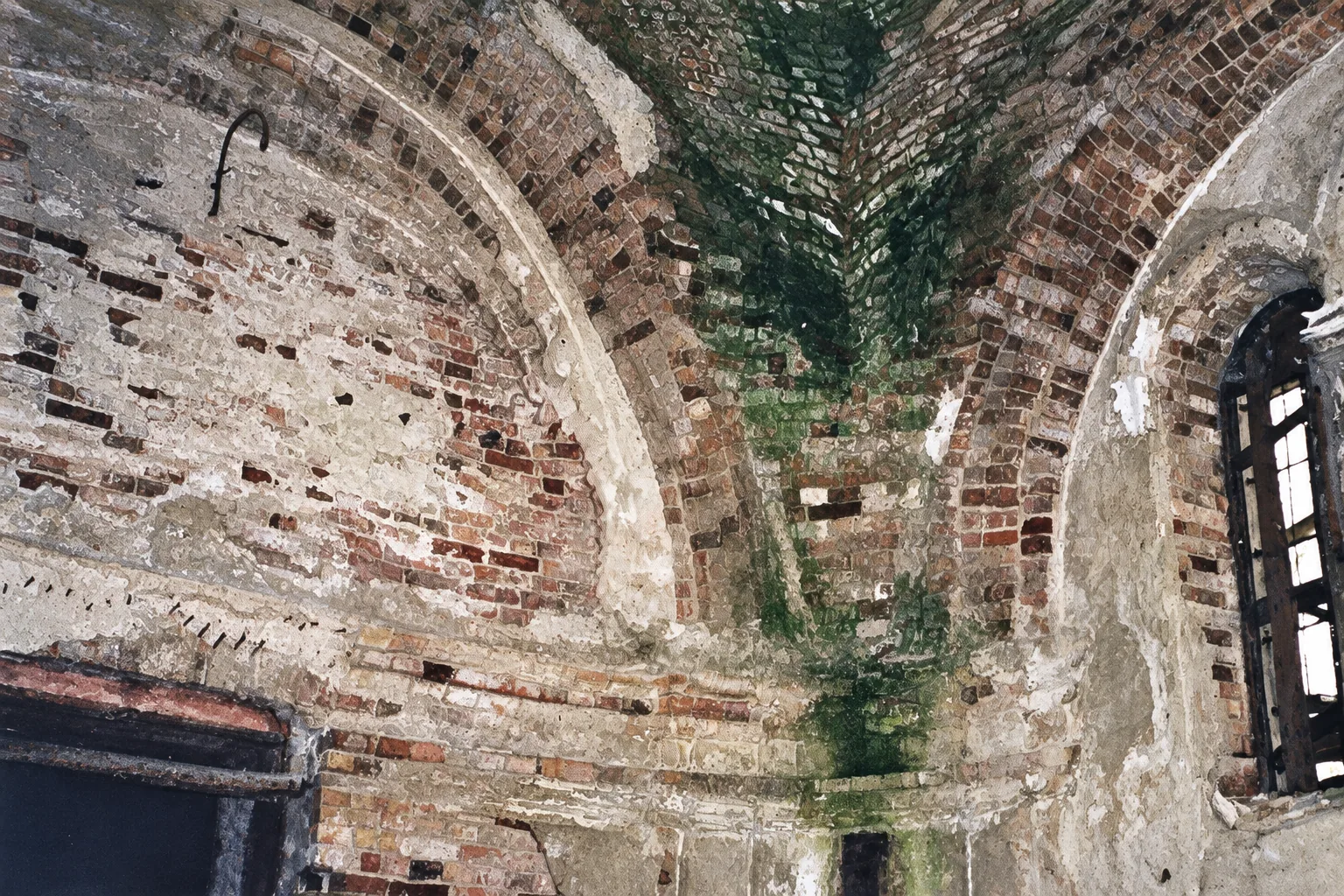
After the First World War the Vilnius region passed to Poland and the lands of Russian nobles were nationalised. An agricultural school was housed in the manor. During the Second World War, according to Ivanova's study, the German occupation authorities used the cellars of the manor house as a transit prison for Jews. The church itself, according to the Vilnius District Municipality, was heavily damaged during the war.
In 1944 the first vocational technical school in Lithuania, training tractor and excavator operators, opened in Bukiškis. For many years the remains of the church served as this school's storehouse, as both the municipality and the Register of Cultural Property state; among the register's sources are documents of 1962 from the Lithuanian Central State Archives, including a secret report to party officials.
In the Soviet decades the family vault was looted. According to Ivanova's study, the robbers did not reach the general's grave beneath the altar, but the burials of Praskovya Nikolaevna and the sons were ransacked; the remains were reburied in the churchyard behind the altar. A generator was installed in the cellar, and its vibration went on wrecking the walls. As the municipality's note puts it, ruins and cellars remained of the church, in which the general's family is presumed to be buried.
Sources for this section: [1][3][2]
Return and restoration
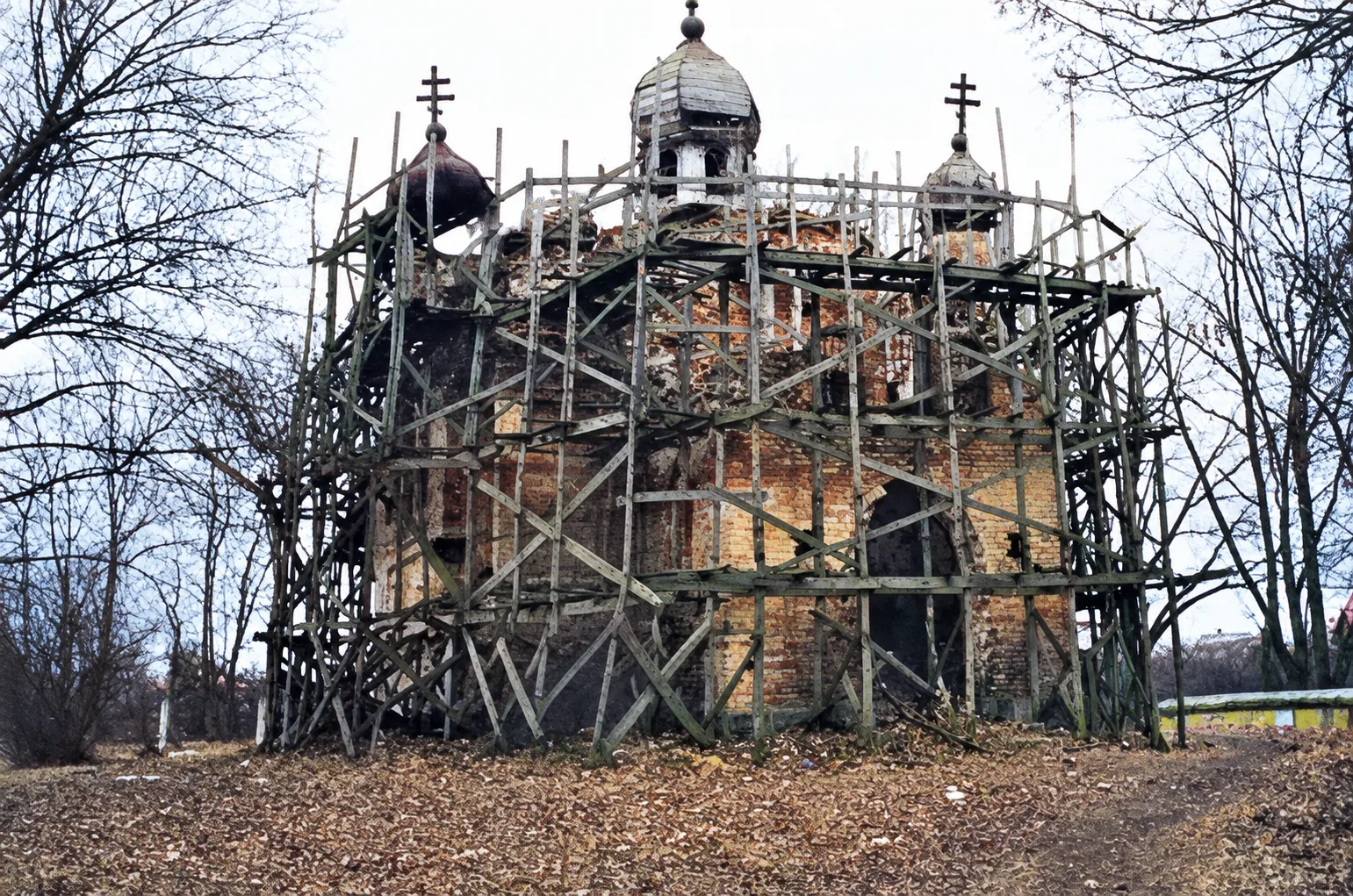
Around 1990, before the building was returned, drawings for the restoration of the Pokrov church were prepared, as the municipality's note reports. In the late 1990s the state returned the church to the Orthodox Church. According to the parish, restoration works began in 2002 and followed those old drawings.
The works proceeded with the active involvement of Metropolitan Chrysostomos (Martishkin) of Vilnius and Lithuania, who led the diocese from 1990 to 2010; the parish essay gives his care a decisive role. The municipality's note and Lithuanian sources record that the church was restored through the care of two hierarchs: the Orthodox Metropolitan Chrysostomos and the Catholic Archbishop of Vilnius, Cardinal Audrys Juozas Bačkis. The register dates the repair of the building to 2007; in the same year, according to the municipality, the small church was restored.
More than ten years passed between the return of the ruins and the first service. It was the work of many people — builders, donors, the diocese — and the sources available to us do not name them all. If you have documents or photographs from those years, the parish would be grateful for the chance to complete this account.
Sources for this section: [4][3][2]
2011: the Church of the Nativity of Christ
In the summer of 2011 services began in the restored church, with the blessing of Archbishop Innokenty of Vilnius and Lithuania, now Metropolitan. Since then the rector has been Father Maksim Krutolevich, who celebrates the Liturgy here on Sundays and feast days.
The revived church bears the name of the Nativity of Christ; Ivanova's study says that in 2011 the church was consecrated in its honour. The exact date, the rite of consecration and those who took part are not recorded in the documents available to us, so we give only the year. The former dedication to the Protection of the Mother of God remains part of the church's history, and in the Lithuanian Register of Cultural Property the building is still listed as the Church of the Protection of the Mother of God. The parish essay also offers a spiritual reading of the change of name — rebirth out of ruins; that is an image, not a documented reason.
In the same year, 2011, descendants of the Bozheryanovs gave the church a family photograph and some documents: the link with the founders was not broken.
Sources for this section: [4][1][2]
Caring for the church goes on
A restored building needs constant upkeep, and the parish provides it with its own resources and the help of benefactors. According to the parish, in 2021 the facing of the entrance steps was replaced; in 2023 damaged brickwork of the turrets on the south and north sides was restored; in 2024 the walls of the sanctuary were painted.
In 2026 the roof was painted, the walls and the dome space inside the church, the sanctuary and the narthex were renewed, and the entrance door was painted; the fitting-out of rooms for parish meetings continues. Behind each of these works stand particular people, their time, their money and their volunteer labour. The parish accepts help towards the upkeep of the church; the details are on the page 'Support the parish'.
Sources for this section: [5]
The parish today
Today people come to the church from Bukiškis, the surrounding villages and Vilnius. The Liturgy, baptisms, weddings, memorial services and other rites are celebrated here; the schedule on the website is updated from the parish calendar. The parish keeps photographs of the restoration, collects memories and publishes material about the church on this website and on social media.
If this is your first time here, start with the schedule and the visiting page: there you will find the address, the buses from Vilnius and the parish telephone. And if the family who built this church has caught your interest, read N. Ya. Ivanova's study (in Russian): it tells things about the Bozheryanovs that no encyclopaedia does.
Sources for this section: [4]